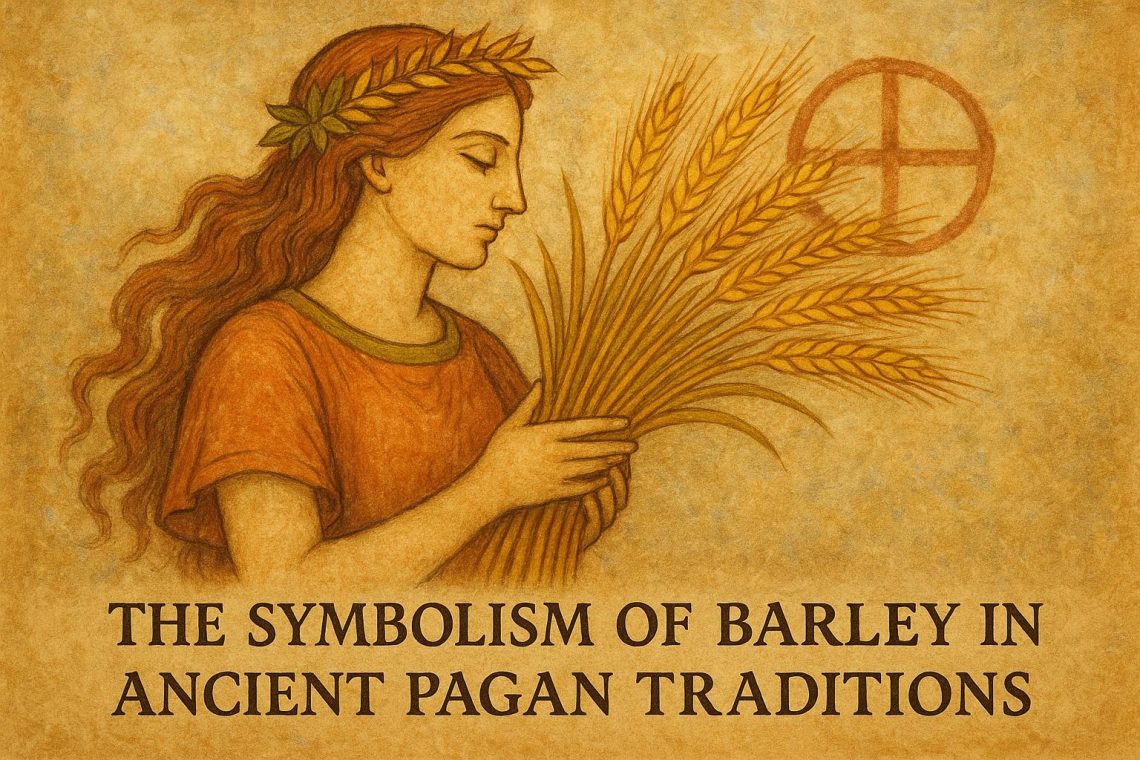
In ancient pagan traditions, barley held significant symbolism and played a crucial role in various rituals and customs. This grain was more than just a staple food; it was imbued with spiritual meaning and used in numerous cultural practices. Understanding the multifaceted role barley played in ancient societies gives us deeper insights into how these communities viewed the natural world and their place within it.
The Symbolism of Barley in Ancient Pagan Traditions
Barley was not only a basic dietary component but also a significant element with deep spiritual connotations. It functioned as an emblem of life’s cycles and the interconnectedness between humanity and nature. This comprehensive look at its symbolism offers perspective into how agricultural phenomena were allegorized in early belief systems.
Barley in Religious Rituals
In many pagan cultures, barley was imbued with divine attributes and featured prominently in religious ceremonies. As a sacred gift from the gods, it was often part of offerings designed to obtain favor or express reverence and thanks. The use of barley in sacred contexts highlights its esteemed status as more than mere sustenance.
For example, in ancient Greek mythology, barley was intimately associated with Demeter, the goddess of agriculture and the harvest. Demeter’s story, widely recounted through the myth of the Eleusinian Mysteries, underscores barley’s religious significance. Rituals conducted in her honor often incorporated barley to ensure bountiful harvests, reinforcing its association with abundance and the gods’ benevolence.
Symbol of Fertility and Renewal
The symbolism of barley as a stand-in for fertility and renewal is tied to its agricultural characteristics and cultural functions. Because of its lifecycle—a pattern of sowing, growing, and harvesting—barley naturally became synonymous with growth cycles and life’s regenerative qualities.
The crop’s hardiness and adaptability symbolized resilience and the ability to regenerate under varied conditions. It became a metaphor for life’s durability and continuity. Many pagan societies incorporated barley into rites of passage. For example, during weddings, barley was employed to bless the union, reflecting the hope for fruitful marriage and future descendants.
The solstice celebrations often saw the invocation of barley’s symbolic properties, as these times marked the earth’s cyclical rejuvenation. Here, barley became an emblem of not just fertility, but also renewal and revival, aligning with the rebirth motifs prevalent in solstice rituals.
Barley and the Cycle of Seasons
Pagan cultures maintained a reverence for nature’s cyclical patterns, with barley mirroring these shifts and embodying the seasonal cycles. From being sown in the expectancy of spring to being reaped in the richness of late summer, barley’s agricultural journey embodied the symbiosis of life and death, growth and dormancy.
Barley’s role in harvest festivals was particularly emblematic. Such festivals celebrated the earth’s yield and were occasions for communities to offer gratitude for nature’s generosity. The gatherings, underscored by the seasonal harvest of barley, provided a moment for communities to reflect on human reliance on natural cycles and express thanks for sustenance.
Moreover, the cycle of sowing and harvesting barley paralleled other natural events tracked by pagan societies. Thus, barley served as a poignant illustration of the relationship between natural phenomena and human existence, encapsulating the ebb and flow of life’s constancy.
Ritual Uses of Barley
In various pagan rituals, barley was adapted into numerous forms such as whole grains, bread, and beer, each with its cultural resonance and ritualistic purpose. As a grain, barley was symbolic when scattered to bestow blessings upon the fields or during consumption in ritual ceremonies.
Barley bread, a staple offering in sacrifices, represented nourishment and held symbolic weight due to its life-sustaining properties. Its preparation and use in rituals underscored the deep connection between physical sustenance and spiritual offerings.
Moreover, the process of fermentation transforming barley into beer offered another dimension to its ritual use. Consumed in communal or sacred feasting, barley beer symbolized unity, shared experiences, and the life-giving force attributed to divine beings. Its role in facilitating social bonds through communal consumption highlighted its importance beyond mere subsistence.
Exploring how barley was revered among ancient cultures reveals not only agricultural practices but also the intricate ways early societies personified elements that sustained human life. Being a part of sacred traditions allowed barley to serve as a constant reminder of the cyclical patterns in nature and expressed humanity’s profound reverence for these cycles. For additional scholarly resources on barley’s cultural symbolism and its impact on historical traditions, engaging with historical and anthropological institutions can provide enhanced perspectives and additional context to the role of barley in these ancient customs.