The Mystical Connection of Beech Trees in Druidry

The Role of Beech Trees in Druidry

The beech tree has long held a significant place within Druidry, a spiritual and religious practice that harks back to the Celtic peoples of ancient Britain and Ireland. The tree is revered not just for its physical attributes but for its symbolic meanings that resonate with Druidic beliefs and practices.

Symbolism and Beliefs

In Druidry, the beech tree is often associated with wisdom and learning. This stems from its connection to the written word; early European manuscripts were sometimes written on beech bark. Consequently, beech trees represent knowledge and the dissemination of information. The Latin word for “book,” liber, and the German word Buch (book), are said to be rooted in the word for beech, illustrating this significant link.

Connection to Knowledge

Beech trees, with their smooth and thin bark, were traditionally used for carving runes and inscriptions. This gave rise to the belief that these trees hold ancient wisdom. In Druidic lore, sitting beneath a mature beech could facilitate a deeper understanding of complex subjects or even inspire creative ideas. This connection to knowledge continues to symbolize the pursuit of learning within modern Druidic practices.

The wisdom of the forests and woodlands is a central theme in Druidry, with beech trees playing a pivotal role. Traditionally, Druids regarded these trees as living libraries, repositories of knowledge that were waiting to be unlocked through meditation and study. This is not just a metaphorical association; the practical use of beech wood by ancient societies for creating tablets and books underscores the depth of this symbolic relationship.

Further cementing its place in Druidic culture, the beech was often associated with the Ogham alphabet, an early medieval alphabet used primarily to write the early Irish language. The letter “B,” or Beithe, is thought to correspond to the beech, denoting not only a letter but also a broader symbolic meaning tied to words and messages.

Beech Trees in Druidic Rituals

In Druidic rituals, beech trees play a significant role due to their connection with knowledge and spiritual insight. They are often used as focal points during ceremonies, where Druids and practitioners may seek guidance or clarity on specific matters. The trees serve as a reminder of the wisdom the earth holds and the continuous cycle of growth and learning.

Cultural and Historical Context

Historically, beech trees have been linked with various cultural traditions. In Celtic mythology, they were seen as guardians of ancient knowledge and were believed to hold the secrets of the forest. Druids, as the learned members of Celtic society, would likely have valued the beech tree for both its practical uses and its spiritual symbolism.

The role of the beech tree extends beyond mere utility and enters into the realm of myth and cultural narratives. In some Celtic tales, beech trees are portrayed as the keepers of mysteries—a reflection of their everyday presence and their perceived spiritual significance. This dual aspect of the beech tree—both as a practical resource and a spiritual symbol—illustrates its comprehensive importance within ancient rituals and beliefs.

Ecological Importance

Beyond their spiritual significance, beech trees play a crucial role in their ecosystems. These trees provide shelter and sustenance to a range of wildlife, from birds and insects to fungi and smaller plants. Their dense canopy and the rich humus layer formed by their fallen leaves promote biodiversity, which aligns with the Druidic reverence for the natural world.

The ecological impact of beech trees is profound, mirroring the interconnectedness celebrated in Druidry. The canopy of a beech tree can support a myriad of life forms, creating microhabitats that are vital for species diversity in forest ecosystems. The leaves, when they fall, decompose to enrich the soil, nurturing the next generation of plant life.

These natural processes align with the Druidic principle of interdependence within nature. Druids have long believed that all aspects of the natural world are linked in a continuous and sacred cycle, and beech trees exemplify this through their role in maintaining ecological balance.

Further Exploration

For those interested in exploring the mystical and ecological facets of beech trees further, many resources can deepen your understanding of their role in Druidry and wider Celtic beliefs. As you learn more about these remarkable trees, the link between nature and spirituality in Druidic practices may become more evident. To further explore, consider visiting sites dedicated to Druidic studies and Celtic traditions, such as articles and publications on Druidry or related subjects.

Immersing yourself in the study of Druids and their spiritual practices can offer insight into how they perceived the natural world. It isn’t merely about acquiring knowledge but understanding the intrinsic values that form the foundations of Druidry—a tradition where respect for nature is paramount.

Exploration of Druidry can lead to a broader appreciation of Celtic mythology and folklore, areas where the beech tree continues to hold symbolic power. Stories, rituals, and writings from ancient times to modern-day interpretations serve to remind us of the enduring legacy of the beech within these cultural frameworks. Through study and reflection, the deeper meanings behind the relationships Druids had with trees like the beech can provide personal and spiritual enrichment.

In conclusion, the beech tree is much more than just a majestic part of the landscape; it is a spiritual companion to many who follow the paths laid by the Celtic traditions. Through its historical, cultural, and ecological roles, the beech tree exemplifies the interconnectedness between humanity and nature—a core tenet of Druidic belief that continues to inspire today.

The Symbolism of Barley in Ancient Pagan Traditions

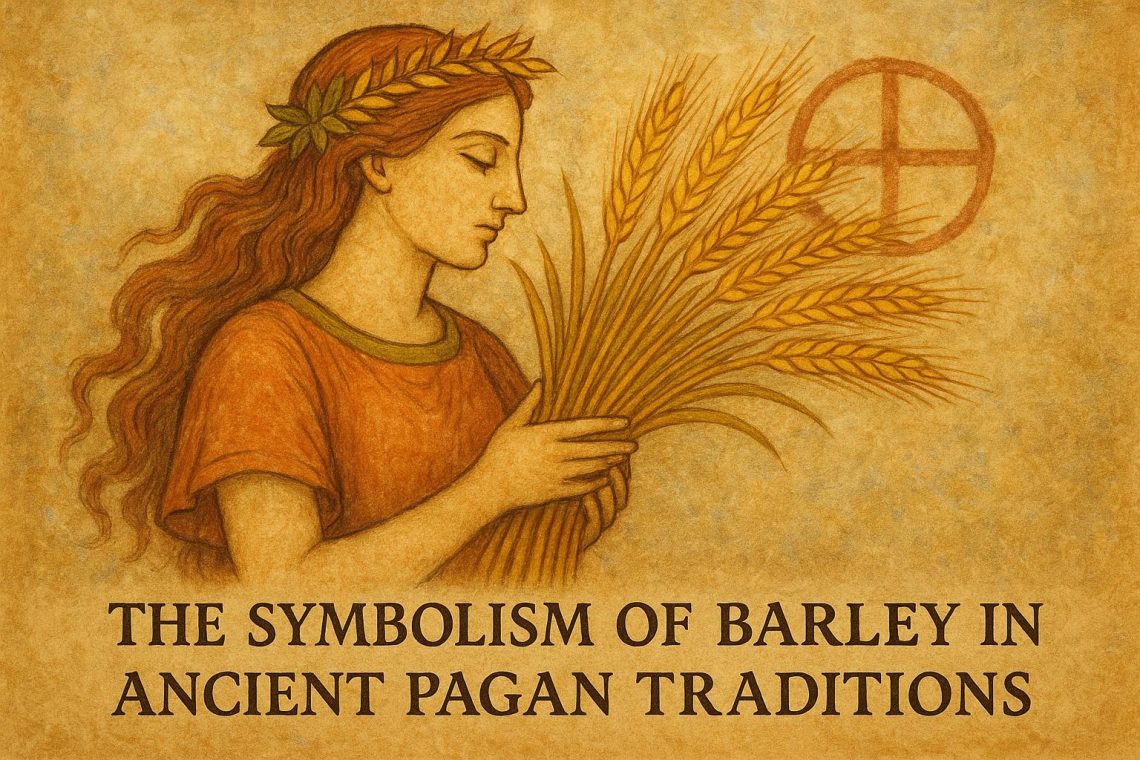
In ancient pagan traditions, barley held significant symbolism and played a crucial role in various rituals and customs. This grain was more than just a staple food; it was imbued with spiritual meaning and used in numerous cultural practices. Understanding the multifaceted role barley played in ancient societies gives us deeper insights into how these communities viewed the natural world and their place within it.

The Symbolism of Barley in Ancient Pagan Traditions

Barley was not only a basic dietary component but also a significant element with deep spiritual connotations. It functioned as an emblem of life’s cycles and the interconnectedness between humanity and nature. This comprehensive look at its symbolism offers perspective into how agricultural phenomena were allegorized in early belief systems.

Barley in Religious Rituals

In many pagan cultures, barley was imbued with divine attributes and featured prominently in religious ceremonies. As a sacred gift from the gods, it was often part of offerings designed to obtain favor or express reverence and thanks. The use of barley in sacred contexts highlights its esteemed status as more than mere sustenance.

For example, in ancient Greek mythology, barley was intimately associated with Demeter, the goddess of agriculture and the harvest. Demeter’s story, widely recounted through the myth of the Eleusinian Mysteries, underscores barley’s religious significance. Rituals conducted in her honor often incorporated barley to ensure bountiful harvests, reinforcing its association with abundance and the gods’ benevolence.

Symbol of Fertility and Renewal

The symbolism of barley as a stand-in for fertility and renewal is tied to its agricultural characteristics and cultural functions. Because of its lifecycle—a pattern of sowing, growing, and harvesting—barley naturally became synonymous with growth cycles and life’s regenerative qualities.

The crop’s hardiness and adaptability symbolized resilience and the ability to regenerate under varied conditions. It became a metaphor for life’s durability and continuity. Many pagan societies incorporated barley into rites of passage. For example, during weddings, barley was employed to bless the union, reflecting the hope for fruitful marriage and future descendants.

The solstice celebrations often saw the invocation of barley’s symbolic properties, as these times marked the earth’s cyclical rejuvenation. Here, barley became an emblem of not just fertility, but also renewal and revival, aligning with the rebirth motifs prevalent in solstice rituals.

Barley and the Cycle of Seasons

Pagan cultures maintained a reverence for nature’s cyclical patterns, with barley mirroring these shifts and embodying the seasonal cycles. From being sown in the expectancy of spring to being reaped in the richness of late summer, barley’s agricultural journey embodied the symbiosis of life and death, growth and dormancy.

Barley’s role in harvest festivals was particularly emblematic. Such festivals celebrated the earth’s yield and were occasions for communities to offer gratitude for nature’s generosity. The gatherings, underscored by the seasonal harvest of barley, provided a moment for communities to reflect on human reliance on natural cycles and express thanks for sustenance.

Moreover, the cycle of sowing and harvesting barley paralleled other natural events tracked by pagan societies. Thus, barley served as a poignant illustration of the relationship between natural phenomena and human existence, encapsulating the ebb and flow of life’s constancy.

Ritual Uses of Barley

In various pagan rituals, barley was adapted into numerous forms such as whole grains, bread, and beer, each with its cultural resonance and ritualistic purpose. As a grain, barley was symbolic when scattered to bestow blessings upon the fields or during consumption in ritual ceremonies.

Barley bread, a staple offering in sacrifices, represented nourishment and held symbolic weight due to its life-sustaining properties. Its preparation and use in rituals underscored the deep connection between physical sustenance and spiritual offerings.

Moreover, the process of fermentation transforming barley into beer offered another dimension to its ritual use. Consumed in communal or sacred feasting, barley beer symbolized unity, shared experiences, and the life-giving force attributed to divine beings. Its role in facilitating social bonds through communal consumption highlighted its importance beyond mere subsistence.

Exploring how barley was revered among ancient cultures reveals not only agricultural practices but also the intricate ways early societies personified elements that sustained human life. Being a part of sacred traditions allowed barley to serve as a constant reminder of the cyclical patterns in nature and expressed humanity’s profound reverence for these cycles. For additional scholarly resources on barley’s cultural symbolism and its impact on historical traditions, engaging with historical and anthropological institutions can provide enhanced perspectives and additional context to the role of barley in these ancient customs.