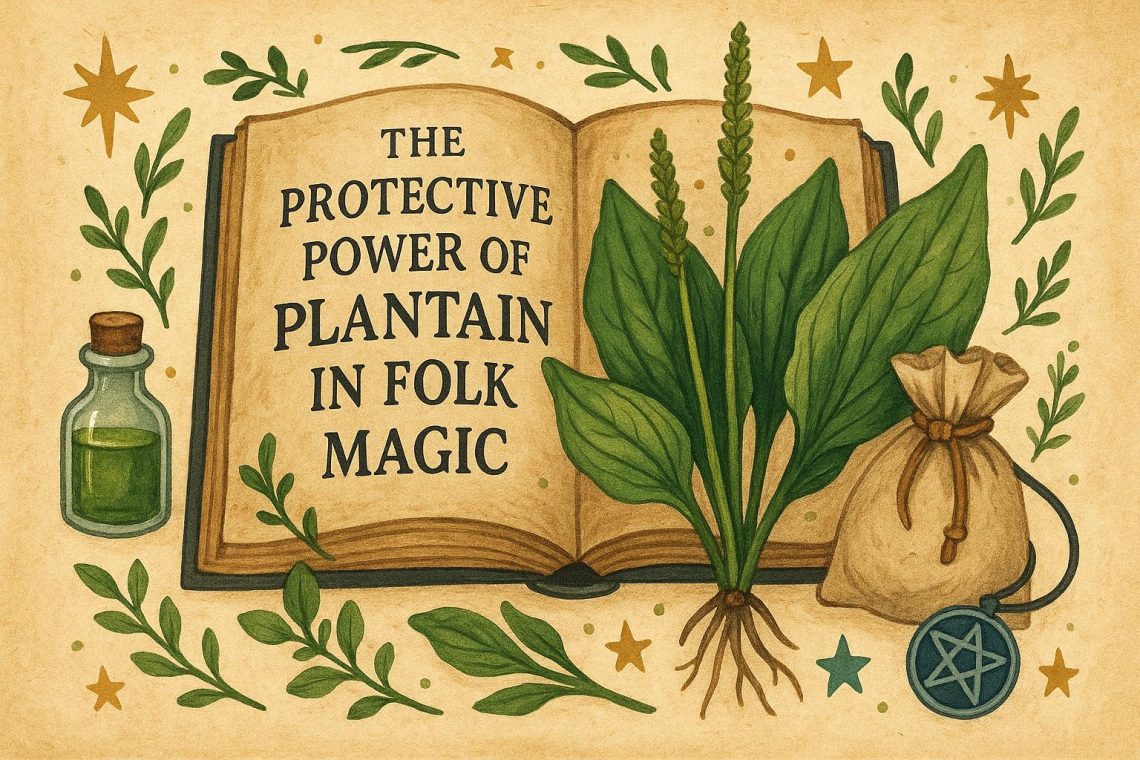
The Protective Power of Plantain in Folk Magic
In the realm of folk magic and traditional herbal medicine, plantain — a simple and often overlooked plant — is endowed with significant protective properties. This unassuming herb has been acknowledged for its mystical and healing attributes across various cultures and time periods.
Understanding Plantain
Plantain, not to be confused with the banana-like fruit, refers to the small, leafy plant known scientifically as Plantago major. Widely found in fields, lawns, and roadsides, plantain is easy to identify by its broad, ribbed leaves and small, green flowering spikes. While it may appear mundane, this plant has been cherished for its multifaceted uses, especially in the sphere of magic and health.
Botanical Characteristics
The plantain is known for its adaptability and resilience. Its ability to thrive in a variety of environments has made it a symbol of endurance. Botanically, it is notable for the characteristic appearance of its leaves, which grow in a rosette pattern close to the ground. These leaves are distinguished by their ribbed texture and are often accompanied by a flowering spike that emerges during the warmer months.
Historical Significance
Historically, plantain has been revered in numerous traditional medicine systems. The plant’s leaves have been employed to address a variety of physical ailments, from wound healing to relief of respiratory issues. This medicinal use is well-documented across many ancient texts and oral traditions, underscoring its broad acceptance as a healing herb.
Traditional Medicinal Uses
Beyond its role in folk magic, plantain has long been used in herbal medicine. Its leaves, rich in bioactive compounds, are known for their anti-inflammatory and antiseptic properties. This has made plantain a favored treatment for cuts, bruises, and other wounds, used either by applying the crushed leaves directly or in the form of poultices and salves. Up till today, plantain remains an important component in natural remedies, reflecting its ongoing relevance in achieving physical well-being.
Folk Magic Practices
In folk magic, plantain is often used as a protective amulet. The plant was believed to shield individuals from evil spirits and negative energies. This belief in protection likely arises from the resilient nature of plantain, as it thrives in various conditions and is difficult to kill, symbolizing endurance and defense.
Carrying a dried plantain leaf in a pouch or sewn into clothing is a common practice for personal protection. For household safeguarding, plantain leaves might be hung at doorways or windows. Such practices not only aim to prevent harm but also to ensure a harmonious environment, reflecting a deep-seated belief in plantain’s power to guard against unwanted influences.
Plantain in Cultural Practices
Cultural interpretations of plantain vary, yet the common theme of protection pervades most traditions. In some cultures, plantain plays a core role in rituals surrounding birth and death. It is thought to protect the vulnerable soul during its transition to or from the physical world. This symbolic strength mirrors the plant’s tenacity in nature, reinforcing its role as a guardian plant.
Ritual Uses
Plantain is occasionally used in purification rituals. Its smoke, when burned, is thought to cleanse spaces of negative influences. Moreover, infusions made from plantain can be used to wash objects or spaces, imparting protective properties and promoting positivity and clarity. These rituals often feature in seasonal celebrations, where renewal and protection are central themes.
The infusion’s preparation involves steeping leaves in hot water, sometimes combined with other protective herbs. Once cooled, the liquid serves as a wash or spray, applied to tools, homes, or even oneself. Through these rituals, plantain acts as a catalyst for transformation, symbolizing the clearing away of old, stagnant energies in favor of new, positive ones.
Modern Applications
While some aspects of folk magic appear dated to contemporary audiences, a resurgence in interest has been noted. People are exploring plantain not only for its historical uses but also as part of a broader interest in natural and holistic practices. The shift towards organic and natural remedies has rekindled an appreciation for plantain, recognizing its simplicity and efficacy.
Reintegrating Folk Wisdom
Modern practitioners of herbal medicine and magic have started to reintegrate folk wisdom into their practices. The renewed interest is part of a larger movement that seeks to harmonize traditional practices with contemporary lifestyles. Plantain, with its protective and healing properties, is at the forefront of this movement, representing a bridge between the ancient and the modern.
Scientific Exploration
Recent scientific studies into plantain’s medicinal properties have validated some of the traditional uses of the plant. Research has confirmed its anti-inflammatory effects, supporting its use in treating minor wounds and skin conditions. These studies have provided a scientific basis for practices that were traditionally based on empirical knowledge passed down through generations.
Contemporary Cultural Significance
Today, the cultural significance of plantain in folk magic serves as a reminder of the rich tapestry of beliefs that extend beyond healthcare. It allows individuals to connect with their heritage and the natural world, fostering a sense of continuity and grounding amid rapidly changing times.
Further Reading
For those interested in exploring the benefits and applications of plantain further, consider consulting traditional herbal medicine texts or studies on ethnobotany. Many resources are available online as well; look for credible herbalist blogs and academic resources to deepen your understanding of this fascinating plant and its uses.
While plantain’s presence in folk magic is but one aspect of its utility, it underscores the intersection of natural elements and spirituality, showcasing how ancient practices continue to influence modern holistic approaches. The timelessness of plantain’s appeal reflects a universal desire to harness the power of nature for protection and healing, illustrating its enduring place in both magical and medicinal realms.